
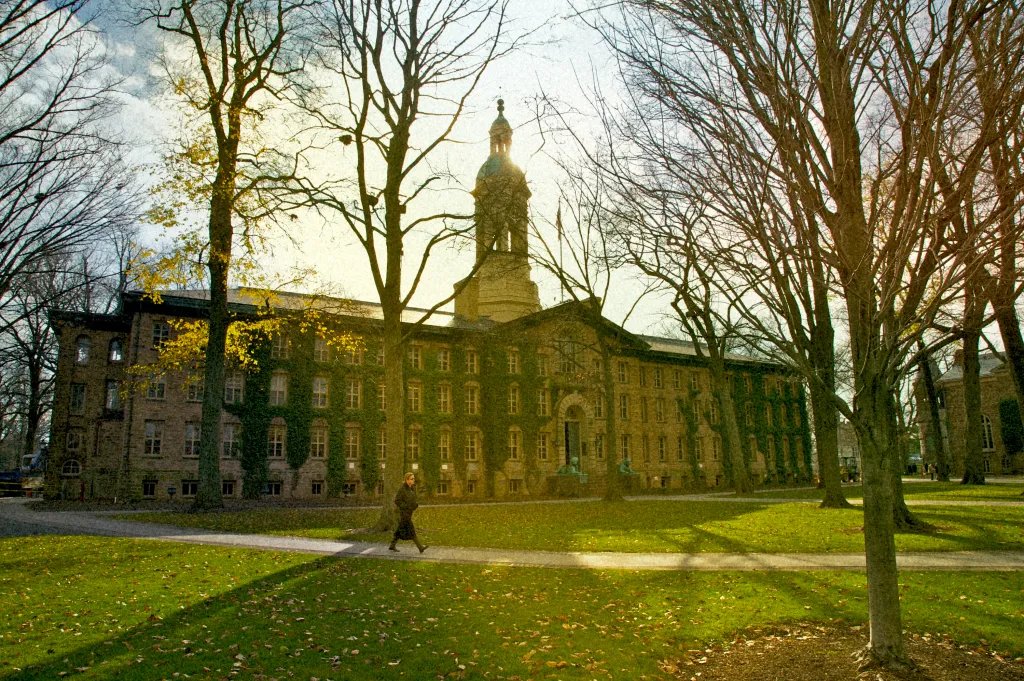
Key things
- Princeton University will begin proctoring all in-person exams starting this summer, ending a 133-year tradition of unprotected testing under its honor code.
- Cheating is easier than ever with tools like AI.
- Data from a recent survey shows a disconnect between the honor code and behavior: about 30% of Princeton seniors admit to cheating.
For more than 100 years, Princeton University considered its honor code sacrosanct, to the point that outside surveillance during exams was essentially prohibited, and a signed pledge was supposed to be sufficient protection.
Those norms are now changing as administrators rewrite the rules in response to a wave of AI cheating.
Earlier this week, Princeton faculty approved a plan to invite proctors to every in-person exam starting this summer, ending a no-proctor policy that had been in place since Princeton adopted its honor code in 1893.
According to a letter from Princeton Dean Michael Gordin, seen by The Wall Street Journal, the change came after a “significant number” of students and faculty supported it “due to their perception that cheating on exams in the classroom has become widespread.”
Gordin wrote that AI has made academic dishonesty much more accessible while obscuring the usual signs of cheating. He noted that students are reluctant to flag suspected cheating for fear of retribution from their classmates. When students voice their concerns anonymously, it often leaves administrators with too little information to address them.
Princeton was one of a small group of universities that trusted students enough to let them sit for exams without a professor in the room, relying instead on a strict, student-driven honor system. Another institution with a similar honor code is the University of Virginia.
Fight against cheating
Under the new rules, professors will sit exams, record any suspected violations, and refer those cases to the Student Honor Committee for review and adjudication. Princeton students will still have to certify that they have followed the honor code: “I promise on my honor that I did not violate the honor code during this exam.”
Nadia Makuc, a Princeton senior who chaired the honor committee last year, told the Journal that she believes most students support the move to proctored exams because it relieves them of the burden of submitting to their peers. She noted that the commission has handled about 60 cases in the past year, a noticeable increase, but suspects that many more potential violations never make it into the system.
It’s easier than ever to cheat, she noted.
“If the exam is on a laptop, someone can switch to another window. Or if the exam is in a blue book, it’s just people using their phone under the table or going to the bathroom and using it,” she told the Journal.
Nearly 30% of Princeton seniors admitted to cheating
A recent survey by The Daily Princetonian, Princeton’s student newspaper, helps explain why the old system was under pressure. In a 2025 survey of more than 500 Princeton seniors, nearly 30% said they had cheated on an assignment or test at some point during their time at the university. At the same time, about 45% said they were aware of an honor code violation that went unreported. Only 0.4%, less than 1 in 200 seniors, said they had never actually dropped off a classmate.
Professors at other institutions have resorted to blue books, oral exams and even typed assignments to combat cheating.
“At stake is not only the soul of education, but also the real development of critical thinking among the population,” Christian Moriarty, professor of ethics and law at St. Petersburg College in Florida.
Key things
- Princeton University will begin proctoring all in-person exams starting this summer, ending a 133-year tradition of unprotected testing under its honor code.
- Cheating is easier than ever with tools like AI.
- Data from a recent survey shows a disconnect between the honor code and behavior: about 30% of Princeton seniors admit to cheating.
For more than 100 years, Princeton University considered its honor code sacrosanct, to the point that outside surveillance during exams was essentially prohibited, and a signed pledge was supposed to be sufficient protection.
Those norms are now changing as administrators rewrite the rules in response to a wave of AI cheating.
Earlier this week, Princeton faculty approved a plan to invite proctors to every in-person exam starting this summer, ending a no-proctor policy that had been in place since Princeton adopted its honor code in 1893.