
14:10 ▪
4
min reading ▪ acc
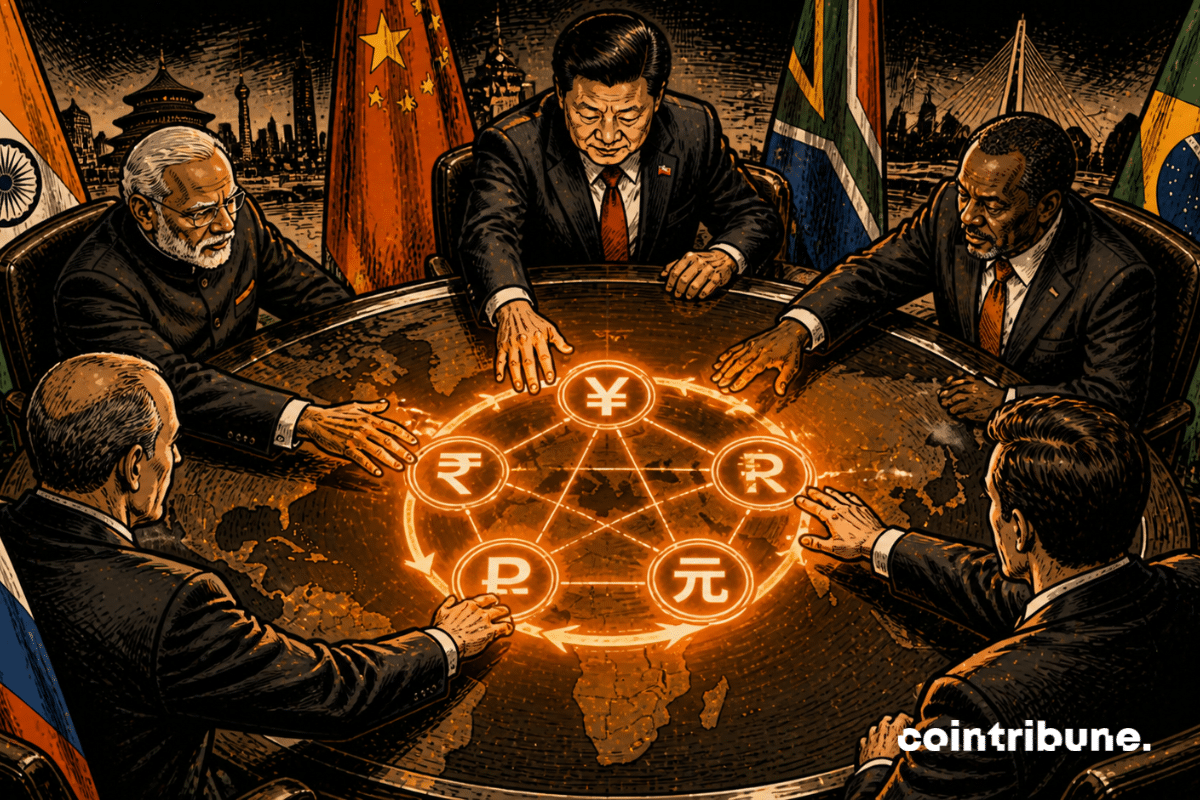
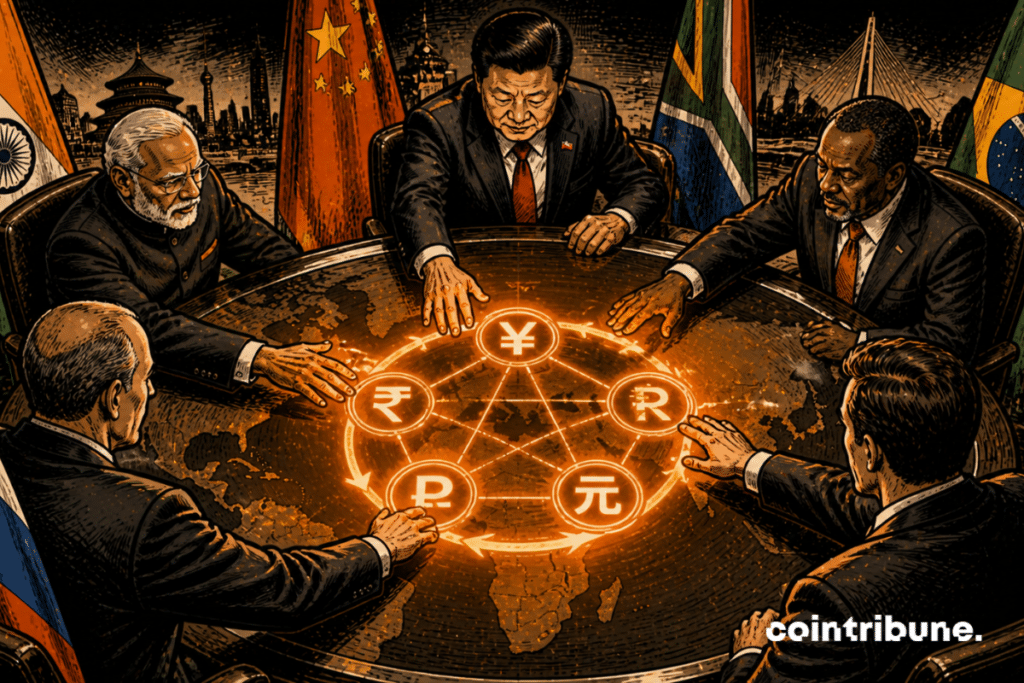
The dollar rules international trade, but its monopoly fluctuates. Faced with geopolitical tensions and Western sanctions, the BRICS are accelerating their strategy to break free from them. The bloc is now working on a local currency payment system capable of profoundly transforming global trade flows. The ambition behind this initiative is clear: to reduce the financial influence of the West and reshape the monetary balance on a global scale.
In short
- The BRICS are studying the introduction of a payment system in local currencies to reduce their dependence on the dollar.
- The aim of the project is to circumvent Western sanctions and strengthen the bloc’s financial autonomy.
- Transactions in local currencies would reduce the costs associated with foreign exchange fees.
- The system could work with near-instant payments between member countries.
Towards a dollar-independent BRICS payment system
The BRICS are currently evaluating the introduction of an intra-currency payment system to reduce their dependence on the US dollar. This project takes place in the context of geopolitical tensions and economic sanctions.
Geeta Kochhar, a professor at the Center for Chinese Studies in New Delhi, describes this mechanism as “a strategic tool aimed at protecting against Western economic influence”stating that they will allow payments “near real time”even in the case of dollar volatility.
This system is based on several structuring elements that reflect a clear desire to transform international trade:
- A payment system directly linking local currencies of member countries;
- An alternative to the dollar, considered the most expensive in terms of exchange fees;
- A settlement channel whose viability depends on the settlement rate;
- Reducing exposure to Western economic sanctions.
The stated goal is to streamline the exchange between members while reducing their dependence on Western-dominated financial infrastructures.
Global ambition driven by the economic weight of the alliance
In addition to simple payment infrastructure, the project is part of a broader strategy aimed at strengthening the role of local currencies in international trade. The yuan, ruble and rupee could thus gain importance in intra-BRICS trade, supported by the growing volume of transactions between these economies.
Geeta Kochhar points out that this system would work as a “safety net”which makes it possible to ensure the supply of essential goods while reducing costs thanks to lower exchange fees. It also states that these exchanges could “bypass western financial restrictions”thereby strengthening the bloc’s economic autonomy.
The potential impact of this initiative takes on a special dimension when we look at the economic weight of the BRICS in certain key sectors. The alliance accounts for nearly 42% of global oil production and about 40% of grain.
In this context, the possible use of an intra-currency system for energy payments could cause major adjustments in international markets. Kochhar discusses BRICS capability “shape the management of local currencies thanks to their economic weight”emphasizing that their influence could extend far beyond their borders.
This project thus opens the way to equalize the global financial system, where several centers of power would exist side by side. Such a development could reduce the influence of the dollar on international trade and at the same time accelerate the creation of new payment infrastructures. It remains to be seen whether this dynamic will last over time and whether it will succeed in the face of already established mechanisms deeply anchored in the global economy.
Maximize your Cointribune experience with our “Read and Earn” program! Earn points for every article you read and get access to exclusive rewards. Register now and start reaping the benefits.

A graduate of Sciences Po Toulouse and holder of the blockchain consultant certification issued by Alyra, I joined the Cointribune adventure in 2019. Convinced of the potential of blockchain to transform many sectors of the economy, I committed myself to raising awareness and informing the general public about this ever-evolving ecosystem. My goal is to enable everyone to better understand blockchain and take advantage of the opportunities it offers. I strive every day to provide an objective analysis of current events, decipher market trends, convey the latest technological innovations, and put into perspective the economic and social issues of this ongoing revolution.
DISCLAIMER OF LIABILITY
The comments and opinions expressed in this article are solely those of the author and should not be considered investment advice. Before making any investment decision, do your own research.