
Opinions expressed by Entrepreneur contributors are their own.
Key things
- There are real deals in a crisis: When the market goes into crisis, the assets don’t become worthless – the underlying value remains.
- Real asset deals in distressed markets are not won by the highest bidder. They are won by the person who spends time on the ground, builds relationships, gains trust and commits to stay.
- The best business decisions at the time often look like the worst. If you’re willing to look past the headlines, you can find great opportunities in places others avoid.
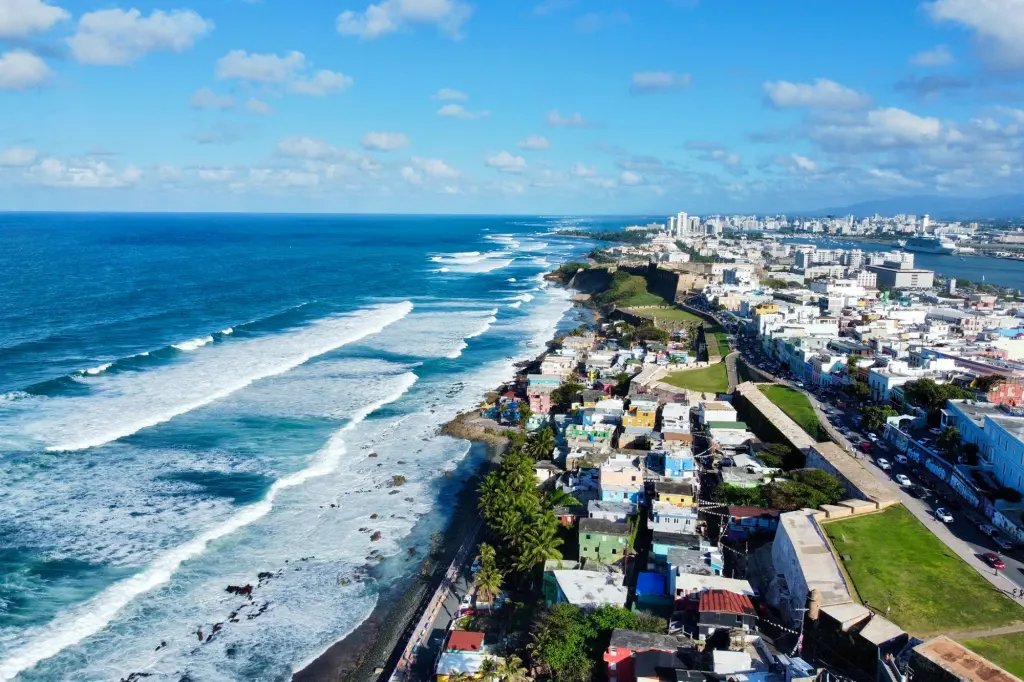
In 2014, when I first landed in Puerto Rico to explore business opportunities, the island felt like a place the world had given up on. The government was drowning in what would become a $72 billion debt default. Unemployment exceeded 13%. Entire neighborhoods had boarded-up storefronts and aging infrastructure. People were leaving — Puerto Rico lost nearly 12% of its population between 2010 and 2020. Everyone I spoke to on land told me I was making a mistake.
I moved forward anyway. What I saw was not a declining economy, but a misappreciated one—an island with extraordinary natural wealth, a skilled workforce, US legal protection, and deep cultural resilience that was valued at the lowest possible level. Over the following years I built up a portfolio of real assets across the island. Today, the transformation of the island is so dramatic that the same people who questioned my decision are now asking how to get inside.
Here’s what I’ve learned about betting where no one else will.
There are real businesses in crisis
When credit agencies downgraded Puerto Rico’s bonds to junk status in 2014, capital fled. Businesses dependent on government contracts or local consumer spending are struggling. Real estate prices have plummeted. For most investors, this was a signal to stay away.
But for someone willing to look past the headlines, the emergency created an extraordinary window. Real assets that would have been fiercely competitive in Florida were suddenly available at a fraction of their replacement cost. Regulatory approvals and permits associated with these properties — which under normal circumstances take years to obtain — came with the transactions. The underlying request has not disappeared. It was just waiting to see who would invest in the infrastructure.
The lesson is universal: Assets don’t become worthless when the market crashes. Capital leaves, operators leave, but the core value remains. Entrepreneurs who can distinguish between a broken economy and a broken story will find their best opportunities in the very places that everyone else is avoiding.
The view is more important than your table
I could analyze Puerto Rico from the office in New York. Instead, I spent weeks in the field interviewing local operators, municipal officials, business owners, and community leaders. What I discovered was an island desperate for investment—not charity, but real operational commitment.
When I started acquiring the property, the previous owners had deferred maintenance for years. The equipment was deteriorating. The equipment was outdated. Customers and tenants were leaving. Turnover required more than capital. It required presence, relationship-building, and a willingness to solve problems that no financial model could have predicted—from managing post-hurricane to being able to hire and train local teams in a job market that had been hollowed out by emigration.
This is something that spreadsheet investors constantly miss. Real asset deals in troubled markets are not won by the highest bidder. They are won by the one who shows up, gains trust and commits to stay. Community relations will become your competitive moat—and in Puerto Rico, that moat runs deep.
The healing you don’t hear about
The Puerto Rico of 2026 bears little resemblance to the island I arrived on in 2014. The numbers tell a remarkable story.
Unemployment fell from over 13% to an all-time low of 5.6%, the lowest sustainable rate in the island’s history. Private sector employment reached a record 767,400 jobs in 2025. Tourism has seen four consecutive record years, with 6.8 million passengers arriving at the airport in 2025 alone. Last year, $2.6 billion in new investments were announced. More than 12,500 reconstruction projects are currently underway, worth nearly $17 billion in federal funds.
The island officially exited bankruptcy in March 2022. The government recently extended its Act 60 tax incentive program until 2055, which offers a 4% corporate tax rate for qualified export services and favorable capital gains treatment for resident investors. Net migration has stabilized and skilled workers are beginning to return unofficially.
None of this happened overnight. It took decades of painful restructuring, devastating hurricanes and stubborn rebuilding. But the trajectory is unmistakable.
What entrepreneurs should consider before taking the leap
Puerto Rico is not a shortcut. Entrepreneurs who come only for the tax incentives with no real commitment to operate on the island tend to struggle. The real opportunity belongs to those who see Puerto Rico as a place to build—not just a shelter.
If you are considering it, here is my honest advice from the 12 years I have been there:
First come in person. Spend time outside of San Juan. The East Coast, South and West have distinct economies and communities. Your business model must match real local needs – not just a tax optimization strategy.
Second, plan for complexity. Permits, utilities, logistics and supply chains in Puerto Rico require patience and local knowledge. Build relationships with local experts who know the regulatory environment.
Third, think in decades. The entrepreneurs who have thrived here are those who have made a long-term commitment. The island rewards patience. It punishes opportunism.
Puerto Rico taught me that the best business decisions often look like the worst at the time. In 2014, betting on a bankrupt island was counterintuitive to the point of recklessness. Ten years later, it was the most important business decision of my career.
Key things
- There are real deals in a crisis: When the market goes into crisis, the assets don’t become worthless – the underlying value remains.
- Real asset deals in distressed markets are not won by the highest bidder. They are won by the person who spends time on the ground, builds relationships, gains trust and commits to stay.
- The best business decisions at the time often look like the worst. If you’re willing to look past the headlines, you can find great opportunities in places others avoid.
In 2014, when I first landed in Puerto Rico to explore business opportunities, the island felt like a place the world had given up on. The government was drowning in what would become a $72 billion debt default. Unemployment exceeded 13%. Entire neighborhoods had boarded-up storefronts and aging infrastructure. People were leaving — Puerto Rico lost nearly 12% of its population between 2010 and 2020. Everyone I spoke to on land told me I was making a mistake.
I moved forward anyway. What I saw was not a declining economy, but a misappreciated one—an island with extraordinary natural wealth, a skilled workforce, US legal protection, and deep cultural resilience that was valued at the lowest possible level. Over the following years I built up a portfolio of real assets across the island. Today, the transformation of the island is so dramatic that the same people who questioned my decision are now asking how to get inside.
Here’s what I’ve learned about betting where no one else will.